Food packaging is no longer only about filling pouches, sealing trays, and moving cartons. Modern lines use sensors, checkweighers, vision systems, and robotic arms to manage these tasks with greater consistency. Yet many manufacturers still ask, “why is automation important in food packaging?” The answer involves more than speed. Automation can support food safety, reduce handling errors, improve portion control, and create clearer production records.
A well-designed system can inspect seals, reject underweight packs, and identify damaged labels within seconds. It can also help workers avoid repetitive lifting near hot, wet, or fast-moving equipment. These benefits matter in facilities producing chilled meals, snacks, beverages, and ready-to-eat foods. Quality assurance teams can connect automated checks with HACCP plans or ISO 22000-based procedures. That connection does not replace human judgment. It strengthens it.
But automation is not a magic solution. Poor calibration can send good products to waste bins. Bad data can make a clean dashboard look convincing. A rushed installation may even slow production during maintenance or changeovers. This is where practical planning matters. Managers should examine product size, packaging materials, cleaning routines, operator training, and emergency stops before investing. Start small. Measure results. Improve the weak points. The following seven tips explore how automation can improve food packaging while keeping safety, reliability, and people at the center. The best system is not always the most expensive one.
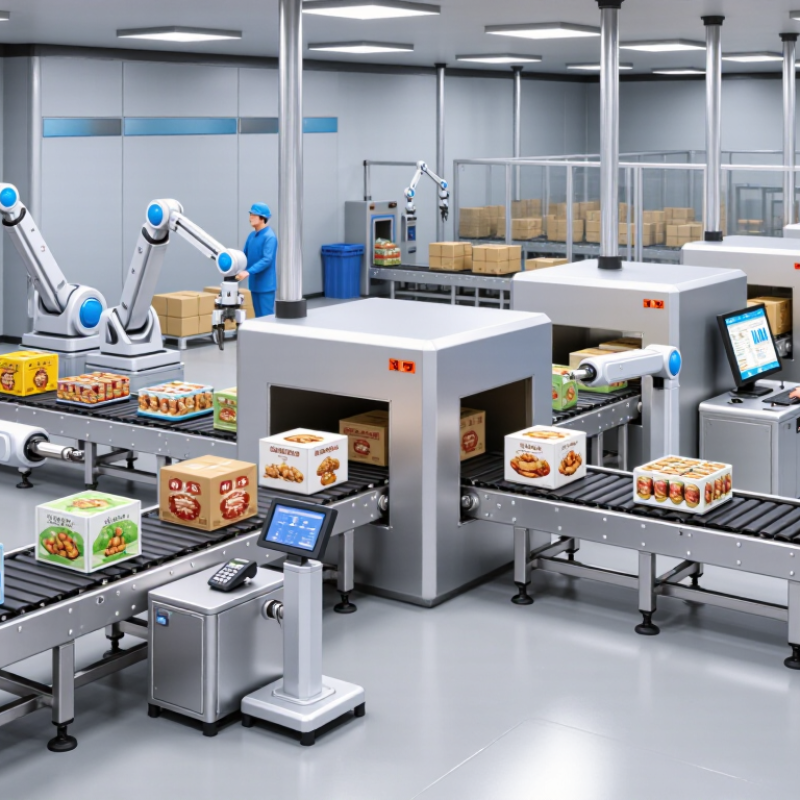
Automation in food packaging means coordinating machines, people, materials, and data. It is more than placing products into bags or cartons faster. Sensors can detect missing items, while checkweighers verify consistent portions. Vision systems can identify damaged seals, crooked labels, or foreign packaging materials. Conveyor controls then move acceptable packs toward coding, case packing, and palletizing. In practical operations, this creates a connected process with fewer manual interruptions. Automation also records production information, which supports traceability.
Tip: Map the process first.
Tip: Automate repeated movements.
Tip: Keep operators involved.
A reliable system should support sanitation, safe access, and quick changeovers between product sizes. Operators still adjust settings, inspect equipment, and respond to unusual conditions. Training matters because a sophisticated machine can still produce poor results after an incorrect setup.
These details can reduce waste, protect product quality, and improve workplace consistency.
Automation does not remove every problem. It can create new ones, including sensor faults, rigid workflows, and expensive maintenance needs. I have seen teams trust production data without checking whether sensors were calibrated. That is a quiet weakness.
Tip: Verify data manually. Tip: Plan maintenance before failure.
Human judgment remains necessary, especially during new product trials or unexpected packaging changes. The strongest operation usually combines measured automation with experienced people, not machines alone.
Automated filling and sealing reduce unnecessary hand contact with ready-to-eat products. Less contact can mean fewer contamination opportunities. Human checks still matter.
Smooth, accessible surfaces help workers remove food residue quickly. Fewer hidden gaps can reduce trapped moisture and particles. Design is not everything.
Sensors can monitor temperature, seal pressure, and package presence. Small changes may reveal risks before products leave the line. Calibration must remain accurate.
Scheduled cleaning checks confirm that food-contact surfaces receive regular attention. Digital records can show missed tasks or unusual delays. A neglected conveyor remains dangerous.
Vision systems can identify damaged seals, leaks, foreign particles, and missing labels. Dust, glare, or poor calibration may cause missed defects. They are helpful, not perfect.
Controlled filling can prevent small overfills from becoming thousands of wasted portions. Sensors can catch misplaced products before shipment. Some waste may still occur.
No. Employees still configure machines, inspect quality, and respond to unusual conditions. One operator may monitor several connected machines. Skills remain necessary.
Machines can handle hot products, sharp edges, heavy cases, and repetitive lifting. Guards, emergency stops, and maintenance can reduce injuries. Poor installation creates new risks.
Connected batch records help teams isolate affected lots quickly. They also document corrective actions and production details. Records are useful only when staff enter accurate information.
Automation in food packaging refers to using machines, sensors, software, and coordinated production systems to handle tasks such as filling, sealing, labeling, inspection, and palletizing with limited manual intervention. Understanding why is automation important in food packaging begins with its ability to improve production speed, accuracy, and consistency. Automated equipment can maintain precise portion sizes, secure seals, and uniform package quality while supporting continuous operations. It also strengthens food safety and hygiene by reducing unnecessary human contact, controlling process conditions, and enabling reliable cleaning and inspection routines.
In addition, automation can reduce material waste, labor costs, and workplace risks by limiting repetitive, physically demanding tasks and detecting errors earlier. However, successful implementation requires careful planning. Businesses should evaluate production volume, product characteristics, available space, equipment flexibility, sanitation requirements, employee training, maintenance support, and long-term return on investment. When selected and integrated properly, packaging automation creates a more efficient, safer, and consistent operation that can adapt to changing customer and production demands.

 Nexa Machine