China’s food packaging machine industry serves manufacturers handling flexible films, rigid containers, paper, aluminum foil, and composite materials. Yet one machine rarely handles every format without adjustments. The practical question is: what materials can food packaging machines handle under real production conditions?
Common compatible materials include polyethylene, polypropylene, polyester film, laminated structures, and recyclable mono-material films. These materials appear in pouches, sachets, flow packs, and vacuum bags. Paper-based packaging may also run on selected form-fill-seal equipment, especially when coatings improve strength and sealing. Some lines handle aluminum trays, plastic cups, glass jars, or metal cans through filling, sealing, labeling, and end-of-line systems.
Material behavior matters.
A film’s thickness, stiffness, slip level, and heat-sealing range affect machine performance. Moisture and powder products can create different challenges. A small variation in film tension may cause wrinkles, weak seals, or uneven cutting. Engineers often adjust temperature, pressure, forming speed, and feeding systems during sample trials. These trials provide stronger evidence than a general product brochure.
Reliable Chinese suppliers should provide technical specifications, test videos, material recommendations, and documented quality procedures. Buyers should request trials using their actual packaging rolls and food products. Food-contact requirements, traceability, cleaning access, and production capacity also deserve careful review. A machine that performs well in a showroom may behave differently after eight hours of continuous operation. That possibility is easy to overlook.
There is no universal answer. The best material choice depends on the package design, product characteristics, sealing method, and target output. Careful testing prevents expensive assumptions and supports safer, more consistent packaging production.
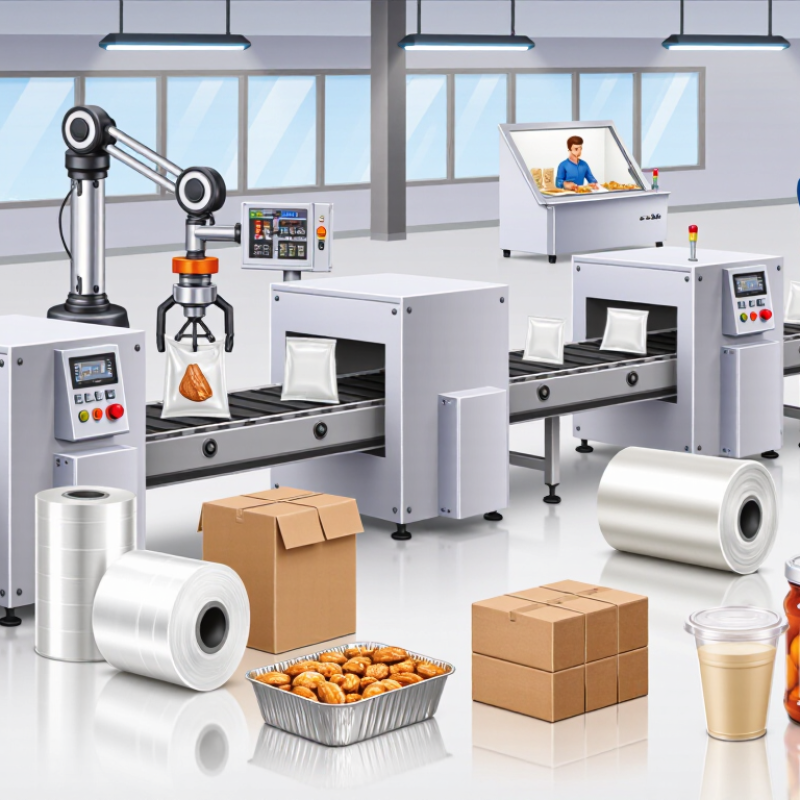
China’s food packaging machines can process many packaging materials, depending on the machine structure and sealing system. Common options include polyethylene, polypropylene, polyester, nylon, and multilayer laminated films. These materials support pouches, sachets, pillow bags, and vacuum packs. Paper-based films can also run on selected equipment, especially when paired with a heat-sealable inner layer.
Machines for trays may handle plastic, aluminum, or coated paper trays. Some systems fill and seal cups made from polypropylene or laminated paperboard. Rollstock equipment often works with thin films, while premade-pouch machines require stable bag dimensions and stronger opening edges. Aluminum foil gives excellent light protection, but it needs careful tension control. Otherwise, wrinkles can appear near the seal.
Material choice affects speed, temperature, and product safety. A film that seals well at 140°C may fail at another setting. Humidity can also change paper performance. In production trials, operators should check seal strength, film tracking, and cut accuracy across several batches. Small adjustments matter. Do not assume one machine handles every material equally. Even similar films may behave differently because of thickness, coating, or adhesive layers. A practical test with the actual packaging material remains more reliable than a specification sheet. Mistakes often happen when users focus only on machine speed. Packaging compatibility deserves equal attention.
| Material | Common Food-Packaging Use | Compatible Machine Types | Important Processing Considerations | Typical Heat-Sealing Range* |
|---|---|---|---|---|
| Low-density polyethylene (LDPE) | Inner sealing layers, bread bags, frozen-food bags, liners and flexible pouches | VFFS, HFFS, premade-pouch and sachet machines | Easy to seal and flexible; excessive heat can cause film shrinkage, distortion or sticking | 120–160°C |
| Polypropylene (PP) | Snack bags, noodle packs, retort pouches, cups, trays and lids | VFFS, HFFS, cup-sealing, tray-sealing and thermoforming machines | Good moisture resistance and higher temperature capability than PE; sealing depends on grade and coating | 130–170°C |
| Polyethylene terephthalate (PET) | Clear lidding film, trays, bottles, jars and laminated outer layers | Thermoforming, tray-sealing, bottle-filling and laminating lines | Strong and dimensionally stable; PET usually needs a compatible heat-seal coating or sealant layer | 140–180°C |
| Polyamide (PA / Nylon) | Vacuum pouches, meat and cheese packaging, and high-strength laminated films | Vacuum, thermoforming, HFFS and premade-pouch machines | High puncture resistance; moisture absorption can affect film dimensions and sealing consistency | 140–180°C |
| EVOH multilayer film | High-barrier pouches, trays and packs for meat, dairy, sauces and ready meals | Thermoforming, tray-sealing, vacuum and modified-atmosphere packaging machines | Excellent oxygen barrier when protected by other layers; sealing is performed through the PE or PP sealant layer | 120–170°C |
| Aluminum foil laminates | Coffee packs, pharmaceutical-style food sachets, retort pouches and high-barrier wraps | VFFS, HFFS, sachet, premade-pouch and retort-pouch machines | Provides strong light, oxygen and moisture protection; foil must be laminated with a heat-sealable polymer layer | 130–180°C |
| Paper and paperboard | Cartons, sleeves, paper bags, cups, takeaway boxes and dry-food packaging | Cartoning, case-packing, paper-bag, cup-forming and glue-sealing machines | Paper is generally folded, glued or coated rather than heat-sealed directly; moisture-resistant coatings affect machine settings | Not applicable unless coated |
| PLA and compostable films | Dry snacks, produce bags, tea packaging and selected compostable pouches | VFFS, HFFS, pouch and flow-wrapping machines with adjustable sealing controls | Narrower processing window than common PE films; material certification and humidity control are important | 120–160°C |
| Glass | Jars and bottles for sauces, beverages, baby food and preserved foods | Filling, capping, labeling, rinsing and inspection lines | Rigid and chemically stable but breakable; conveying, gripping and impact protection must be carefully designed | Mechanical closure |
| Tinplate and aluminum containers | Cans for vegetables, seafood, meat, beverages and powdered foods | Can-filling, seaming, lidding, coding and palletizing lines | Requires accurate container handling and seam control; product and can dimensions determine line configuration | Mechanical seam |
*Heat-sealing ranges are indicative starting ranges for common packaging structures, not universal settings. Actual values depend on film thickness, sealant layer, coating, machine speed, dwell time, pressure and product requirements.
They can process polyethylene, polypropylene, polyester, nylon, and multilayer laminated films. They may produce pouches, sachets, pillow bags, and vacuum packs. Some equipment handles paper-based films with heat-sealable inner layers.
Yes, with suitable line configurations. Glass needs gentle conveyors, stable gripping, and accurate filling control. Metal cans require stronger feeding systems and reliable sealing pressure. Fast feeding may still damage thin metal edges.
Tray systems may process plastic, aluminum, or coated paper trays. Cup systems can fill and seal polypropylene or laminated paperboard cups. The forming and sealing structure must match the material.
Rollstock equipment commonly uses thin films from a continuous roll. Premade-pouch machines need stable bag dimensions and strong opening edges. A visually similar pouch may still open poorly.
Material choice changes speed, sealing temperature, tension, and product protection. A film sealing at 140°C may fail at another setting. Thickness, coatings, and adhesive layers can change results. Small differences matter.
Aluminum foil provides strong light protection. It needs careful tension control during transport. Poor control can create wrinkles near the seal. The seal may look acceptable but fail later.
Not always. Paper-based packs may absorb moisture, while compostable films can soften under heat. Mono-material films may need precise temperatures and longer sealing dwell times. Some “green” materials perform poorly in real production.
Run trials using the actual packaging material across several batches. Check seal strength, film tracking, cut accuracy, drop resistance, and filling accuracy. Also measure cleaning time and sensor performance. A specification sheet is not enough. Test carefully.
Food packaging machines can process a wide range of materials, depending on their structure, sealing method, feeding system, and level of automation. This article explores what materials can food packaging machines handle, including paper, cardboard, corrugated board, plastic films, flexible pouches, trays, and rigid containers. Each material requires carefully matched forming, filling, sealing, cutting, or labeling functions to ensure stable production and reliable package quality.
The discussion also covers glass, metal, and more sustainable packaging options, highlighting how machine design can be adapted to different weights, shapes, thicknesses, and surface properties. From lightweight paper packaging to durable containers and recyclable material combinations, selecting suitable equipment helps improve efficiency, product protection, and packaging consistency. Understanding material compatibility is essential for choosing a practical packaging solution that supports food safety, production goals, and changing environmental expectations.

 Nexa Machine