How to Integrate Packaging Machines Into Existing Lines?

Time:2026-09-17 Author:Isabella
0%

Upgrading an operating packaging line can feel like changing an aircraft engine during flight. Production must continue, operators need clarity, and every connection must work safely. This guide explains how to integrate packaging machines into existing production lines without treating integration as a simple equipment purchase. The real work begins with understanding the line’s current rhythm, limitations, and hidden delays.

Sean Riley, Senior Director of Media and Industry Communications at PMMI, has emphasized a practical principle: “Automation works best when it solves a defined production problem, not when it is added simply because it is available.” That perspective matters. A new cartoner, filler, labeler, or case packer should support a measurable goal. It might reduce product handling, improve changeover time, or stabilize output during long shifts. Guesswork is expensive.

A reliable integration plan starts with site measurements, machine data, product dimensions, and operator feedback. Engineers should review conveyor heights, electrical capacity, compressed-air demand, guarding, controls, and upstream or downstream speeds. A five-minute stoppage can expose a weak handoff between machines. Small details matter. For example, an infeed sensor positioned too close to a transfer point may create repeated product jams.

The process is rarely perfect. Existing lines often contain undocumented modifications, aging components, or inconsistent settings. These issues deserve attention before installation. Factory acceptance testing, line trials, training, and performance monitoring can reduce surprises. Still, integration should remain flexible. The best design may require fewer machines, not more. Careful observation, qualified partners, and honest testing create a safer path toward dependable packaging automation.
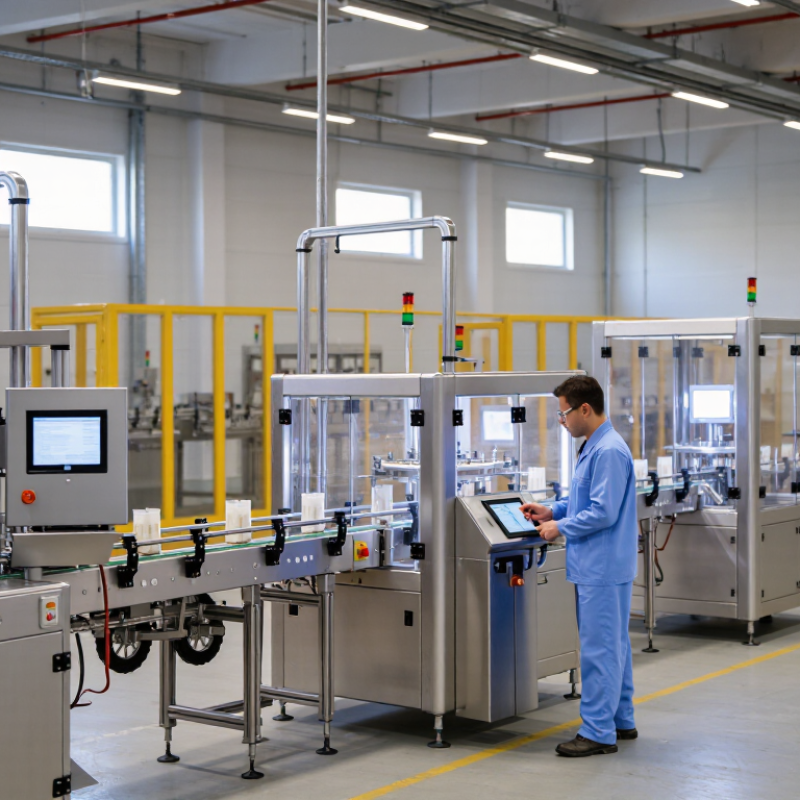
How to Integrate Packaging Machines Into Existing Lines?

Assessing Existing Lines and Defining Integration Requirements

How to Integrate Packaging Machines Into Existing Lines?

Assessing Existing Lines and Defining Integration Requirements

Before selecting equipment, document how the existing line actually behaves. Measure product flow, conveyor speeds, changeover times, and available floor space. Measure the reality.

Walk the line during normal production and during cleaning. Note cable routes, compressed-air pressure, access doors, operator movements, and recurring stoppages. A layout drawing may hide these practical constraints. In one assessment, the planned machine fit physically, but its service door blocked a nearby inspection point. The first estimate was wrong.

Define the integration requirements in measurable terms. Specify target output, product dimensions, acceptable reject rates, changeover frequency, and upstream or downstream buffer capacity. Confirm electrical loads, network connections, guarding interfaces, and control signals before requesting quotations. Leave room for maintenance.

Operators should help shape the requirements. They know which adjustments are frequently made and where jams usually begin. Maintenance teams can identify worn components, difficult cleaning areas, and unsafe reaching positions. Their experience often reveals issues that production data misses.

Create an interface list for every connection. Include mechanical, electrical, pneumatic, software, and safety responsibilities. Clarify who supplies each cable, sensor, enclosure, and control update. Use trial products during testing, not only ideal samples. Real products vary slightly. That variation may expose weak timing assumptions. Allow time for site acceptance testing, operator training, and corrections after installation. A perfect plan rarely survives first contact with the line.

Selecting Compatible Packaging Machines and Interface Standards

How to Integrate Packaging Machines Into Existing Lines?

Selecting a compatible packaging machine starts with the existing line, not the machine brochure. Measure conveyor height, product spacing, available floor area, and electrical capacity. Check the upstream and downstream equipment carefully. A small height difference can create product drops, jams, or unstable transfers.

During a line audit, record actual speeds rather than relying on rated capacity. Machines often run slower after changeovers, cleaning, or minor adjustments. That detail matters.

Interface standards deserve equal attention. Confirm whether the line uses hardwired signals, 24-volt I/O, industrial Ethernet, or a machine-to-machine communication protocol. The new equipment should exchange start, stop, fault, ready, and product-present signals clearly. Safety circuits must remain independent, documented, and tested by qualified personnel.

For recipe data, use a structured communication method with defined data types and access rules. Do not assume that two systems communicate simply because both use Ethernet. They may still need different data mapping or gateway hardware.

Create an interface list before ordering. Include connector types, signal names, cycle timing, network addresses, and responsibility for each function. A dry-run test can reveal missing signals before installation.

In one project, an overlooked reject-confirmation signal caused repeated line stops. It was easy to fix, but costly to discover late. Leave room for cable routing and service access.

Allow time for imperfect assumptions, too. A polished specification can still miss how operators actually work during a busy shift.

Designing the Layout, Material Flow, and Machine Connections

How to Integrate Packaging Machines Into Existing Lines?

Designing the Layout, Material Flow, and Machine Connections

Integrating a packaging machine into an operating line starts with the layout, not the machine frame. Map every conveyor, operator walkway, inspection point, and service door before equipment arrives. Keep product travel in one clear direction whenever possible. Shorter routes reduce transfers, accumulation, and handling damage. Space matters. Leave working clearance around motors, guards, sensors, and change parts. I have seen compact layouts fail because technicians could not open a panel safely. A digital drawing may look efficient, yet floor markings often reveal the real constraint.

Material flow should match the production rhythm. Measure container spacing, belt speed, buffer capacity, and reject movement under normal and peak conditions. Place accumulation before the new machine, not inside a narrow maintenance zone. Separate incoming packaging materials from finished goods traffic. This reduces crossing paths and makes cleaning more predictable. Use transparent sections or visual indicators where jams commonly begin. Do not assume the existing conveyor can carry the added load. Verify frame strength, elevation, and emergency-stop coverage on site.

Machine connections need the same attention as product flow. Confirm electrical capacity, compressed-air quality, network points, drainage, and extraction requirements early. Route cables and hoses above or beside the line, protected from washdown and moving parts. Label each connection at both ends. Test signals with the line stopped, then under realistic speed. Integration is rarely perfect. We once found a sensor cable that was technically correct but too short for safe adjustment. Build in spare length and accessible isolation points. Record the final settings, unresolved risks, and operator feedback after commissioning.

How to Integrate Packaging Machines Into Existing Lines?

Designing the Layout, Material Flow, and Machine Connections

Layout

Arrange equipment in a one-way sequence to reduce backtracking, simplify access, and reserve service clearance around each machine.

Material Flow

The integrated line is balanced around a 96 packs/min target, with buffers placed before slower or changeover-sensitive stations.

Machine Connections

Coordinate conveyors, sensors, safety circuits, compressed air, power, and control-network connections before installation.

The chart compares typical rated capacity with the planned operating target for a balanced packaging line. The lowest-rated station generally determines the practical line throughput and should be considered when sizing conveyors and accumulation zones.

Installing, Configuring, and Synchronizing the Integrated Equipment

Integrating a packaging machine into an existing line begins with a detailed site survey.

Measure conveyor height, available floor space, product flow, and utility locations. Check electrical capacity, compressed-air quality, guarding, and emergency-stop coverage. Small differences in conveyor height can cause product jams. They are easy to miss.

Install the equipment on a stable, level base, then align infeed and discharge conveyors carefully. Configure product recipes, sensor positions, operating speeds, and reject settings before production trials.

The machine should exchange clear signals with upstream and downstream equipment. Use documented PLC handshakes for machine-ready, product-present, fault, and cycle-complete states.

During commissioning, test empty runs first. Then introduce products gradually. The first timing test rarely works perfectly, especially when product spacing changes. Adjust one setting at a time and record every change.

Tips:

Keep spare sensors, connectors, and approved cables nearby. Label every connection clearly. Test emergency stops and safety doors before synchronization. Watch the line for at least one complete shift, not only during a short demonstration. Operators often notice inconsistent feeding before system data reveals it. A useful integration plan should include acceptance criteria, maintenance access, training, and a written recovery procedure. Do not hide weak points. An honest review after commissioning can prevent repeated downtime and unsafe shortcuts.

Testing System Performance, Safety, and Production Reliability

How to Integrate Packaging Machines Into Existing Lines?

Integrating a packaging machine requires more than matching conveyor speeds. The real test begins after installation, when products, operators, and nearby equipment interact. Run the line at low, medium, and target speeds. Record cycle time, rejects, jams, and recovery time. Use identical products during each trial. Small changes in carton stiffness can expose unstable settings. A machine may perform well for one hour, then drift after heat, dust, or repeated adjustments. That weakness deserves attention.

Safety testing should include guards, emergency stops, sensors, and restart behavior. Test each device under realistic conditions, including an empty conveyor and a misaligned package. Operators should understand what happens after a stop. A safe system stops predictably. It restarts only after inspection. Production reliability also depends on maintenance access, spare wear parts, and clear fault messages. Measure unplanned stops across several shifts, not during one successful demonstration. Short trials can mislead. Integration plans are often too optimistic.

Tips: Establish a baseline before installation. Photograph cable routes and sensor positions. Test one change at a time. Ask operators to report unusual noise, vibration, or hesitation. Review these observations with a qualified technician. Keep the record honest, including failed tests and temporary fixes. Perfect data is rare. Useful data is traceable.

How to Integrate Packaging Machines Into Existing Lines? - Testing System Performance, Safety, and Production Reliability
Integrated-line validation data table
Test Category Performance Dimension Verification Method Acceptance Target Before Integration After Integration Status
Production Capacity Line throughput Run the complete line for 60 minutes at the planned product mix and count accepted finished packs. At least 120 packs/minute 96 packs/min 124 packs/min Pass
Production Capacity Overall equipment effectiveness Calculate availability × performance × quality during a representative eight-hour shift. At least 80% 71% 84% Pass
Product Quality Package seal integrity Inspect samples from start-up, steady-state operation, speed changes, and restart conditions using leak and visual checks. No failed samples in the validation set 3 failures / 500 0 failures / 500 Pass
Product Quality Incorrect or missing packs Use challenge samples and production records to verify detection and rejection of missing, misaligned, or incorrect items. Detection rate at least 99% 97.8% 99.6% Pass
Material Flow Product transfer synchronization Monitor accumulation zones, transfer timing, and machine-to-machine handshakes during normal and peak-speed operation. No uncontrolled blockage or starvation 7 events/hour 1 event/hour Pass
Controls Integration Control-signal response time Measure the interval between upstream stop, downstream stop, and fault signals across the integrated control system. Stop response within 500 ms 620 ms 280 ms Pass
Changeover Format changeover time Record the time from the final accepted product of one format to the first accepted product of the next format. No more than 30 minutes 42 min 26 min Pass
Safety Guard and interlock function Open each guarded access point during operation and confirm that hazardous motion stops and cannot restart unexpectedly. 100% of test points functional 18 / 20 functional 20 / 20 functional Pass
Safety Emergency-stop performance Activate each emergency-stop device from representative operating positions and verify safe stopping, alarm indication, and manual reset. All devices stop hazardous motion and require deliberate reset 1 reset issue 0 issues Pass
Safety Safe access and restart prevention Verify that access points, reset controls, and restart sequences prevent automatic motion after a safety event. No unintended restart observed 1 observation 0 observations Pass
Reliability Unplanned downtime Track stops longer than one minute during a continuous 24-hour production trial. No more than 60 minutes 148 min 52 min Pass
Reliability Mean time between failures Calculate operating hours divided by the number of unplanned functional failures during the validation period. At least 40 operating hours 18.5 h 46.2 h Pass
Reliability Mean time to restore Measure the time required to identify, correct, reset, and verify recovery from common line faults. No more than 15 minutes 22 min 11 min Pass
Data & Traceability Production data availability Compare machine counters, reject counts, downtime codes, and shift reports for consistency. At least 98% record completeness 91.4% 99.1% Pass
Operator Readiness Standard operating procedure compliance Observe trained operators performing start-up, normal operation, changeover, fault recovery, cleaning, and shutdown. 100% of critical steps completed correctly 82% 100% Pass
Validation basis: The figures represent a realistic engineering acceptance-test scenario for an integrated packaging line. Actual targets should be confirmed against the product specification, risk assessment, applicable machinery-safety requirements, and the production schedule.

FAQS

What should be checked before installing integrated equipment?

Survey conveyor height, floor space, product flow, and utility locations. Check electrical capacity, compressed-air quality, guarding, and emergency-stop coverage. Small height differences can cause jams.

How should the equipment be positioned?

Use a stable, level base. Align the infeed and discharge conveyors carefully. Poor alignment may create hesitation, tipping, or product buildup.

Which settings should be configured before production trials?

Configure product recipes, sensor positions, operating speeds, and reject settings. Confirm that nearby equipment exchanges clear signals. Record the original settings.

How can communication between machines be tested?

Use documented signals for machine-ready, product-present, fault, and cycle-complete states. Test each signal during empty runs and gradual product trials. Do not assume the handshake works.

What is a practical commissioning sequence?

Begin with an empty conveyor. Then introduce products gradually at low, medium, and target speeds. Adjust one setting at a time and record every change. The first timing test may fail.

Which performance data should be recorded?

Track cycle time, rejects, jams, and recovery time. Use identical products during each comparison. Measure performance across several shifts, not one short demonstration.

What safety checks are necessary before synchronization?

Test guards, emergency stops, sensors, safety doors, and restart behavior. Include an empty conveyor and a misaligned package. A safe system stops predictably. Restart only after inspection.

How can reliability problems be discovered early?

Watch the line for at least one complete shift. Look for heat, dust, vibration, unusual noise, and inconsistent feeding. Operators may notice problems before system data does. Perfect data is rare.

What preparation supports maintenance and recovery?

Keep spare sensors, connectors, approved cables, and wear parts nearby. Label every connection clearly. Document maintenance access, acceptance criteria, training, and recovery steps. Temporary fixes need review.

Conclusion

Integrating packaging machines into existing production lines requires a structured approach that begins with a careful assessment of current equipment, available space, production capacity, utilities, control systems, and operational goals. Clearly defining integration requirements helps determine the necessary machine functions, connection points, communication protocols, and interface standards. The selected equipment should be compatible with existing processes and capable of supporting consistent material handling, product flow, and future expansion.

The next steps involve designing an efficient layout, coordinating material movement, and planning mechanical, electrical, and data connections. During installation, each machine must be configured and synchronized with upstream and downstream equipment to maintain stable timing and throughput. Finally, the complete line should undergo performance testing, safety verification, fault simulation, and reliability checks. This practical process explains how to integrate packaging machines into existing production lines while minimizing disruption, improving coordination, and creating a dependable system that meets production and quality requirements.

Isabella

Isabella

Isabella is a dedicated marketing professional with a sharp focus on driving brand growth and engagement through strategic content creation. With an extensive background in digital marketing, she combines her passion for storytelling with her keen understanding of industry trends to deliver......