Highly optimized packaging systems engineered specifically to meet the strict fresh-keeping requirements and safety certifications of the Japanese market.
The Japanese food industry is characterized by some of the most rigorous freshness, safety, and visual presentation standards in the world. As the market shifts dynamically due to changing demographic factors, such as an aging population and the rise of single-person households, the demand for high-quality, pre-packaged, ready-to-eat (RTE) meals—locally known as "Nakashoku" (home meal replacements)—has skyrocketed. This socioeconomic evolution has transformed Modified Atmosphere Packaging (MAP) technology from a preservation technique into an essential market standard.
Japan’s food processing industry is under intense pressure to comply with the nation's Food Loss Reduction Promotion Act, which aims to halve food waste by 2030 compared to 2000 levels. Consequently, food manufacturers and supermarket chains (such as those supplying Seven & i Holdings and Lawson) are actively integrating advanced gas flushing machinery that extends shelf life without chemical preservatives. For instance, using precise mixtures of carbon dioxide (CO2) to inhibit bacterial growth and nitrogen (N2) to prevent structural collapsing, shelf life can be extended by up to 2-3 times while maintaining the original texture and color of delicate raw materials.
"Our engineering teams are focusing intensely on the interaction between eco-friendly, biodegradable barrier films and sealing temperature profiles. The transition to mono-material recyclable films and paper-based trays in Japan requires extremely precise PID temperature regulation on the sealing bars, a feature standard on all Nexa MAP machinery."
Engineered for versatile manufacturing operations, from large-scale convenience food production lines to compact cleanroom laboratory packaging.
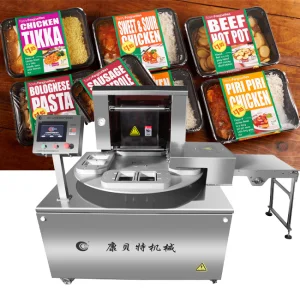
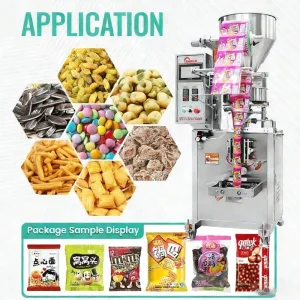
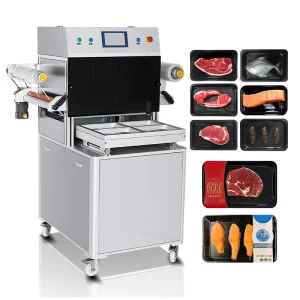
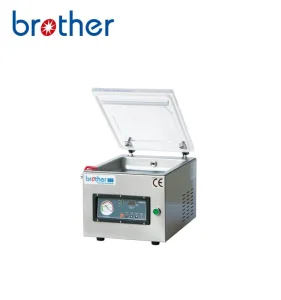
Entering the Japanese industrial ecosystem requires compliance with a distinct set of regulatory policies and machine safety directives. Any manufacturer exporting MAP machinery to Japan must understand these expectations thoroughly, a standard that Ningbo Nexa Machine integrates into its core design flow.
The Electrical Appliance and Material Safety Act (PSE) is mandatory for devices operating under specific voltage thresholds in Japan. Furthermore, the country's electrical grid is split: 50 Hz in Eastern Japan (Tokyo, Yokohama) and 60 Hz in Western Japan (Osaka, Kyoto, Nagoya). Our machines are engineered with dual-frequency capability and feature components certified by global testing organizations to meet METI requirements. Control elements, including PLCs, HMIs, and temperature modules, utilize world-class, easily serviceable brands like Mitsubishi Electric, Omron, and SMC Pneumatics.
Achieving stable shelf-life extension requires maintaining consistent gas ratios within every sealed package. To guarantee this level of consistency, Nexa machines incorporate digital gas mixers that monitor input pressures dynamically. In the event of a pressure drop in either the CO2, O2, or N2 supply lines, the system triggers an automatic alarm and halts operation, preventing improperly packaged food from entering the logistics chain. This level of process control is critical for Japanese processors who operate under strict traceability and quality assurance protocols.
With Japan's corporate sectors pushing toward carbon neutrality, food packagers are transitioning from traditional multi-layer plastics to mono-material PP/PE, bio-based plastics, and even paperboard containers lined with ultra-thin gas barriers. These materials present narrow heat-sealing temperature ranges. Nexa addresses this with high-accuracy PID control loops that regulate heat distribution across the sealing head to within ±0.5°C, ensuring robust hermetic seals without melting or deforming the sustainable packaging materials.
Understanding real-world deployment challenges is key to designing high-performance machinery. Below are two typical application scenarios where Nexa’s packaging technologies are utilized.
Challenge: A medium-sized food production facility supplying convenience stores in the Kanto region needed to reduce manual labor while packaging delicate rice-and-side-dish combinations. They required a system that could minimize residual oxygen to less than 0.8% while maintaining a throughput of 20-30 trays per minute.
Solution: We deployed an automated, continuous MAP inline system equipped with a gas flushing module and custom tray molds matching their specific bioplastic containers. Integrating a high-precision gas mixer allowed them to program precise CO2/N2 ratios, maintaining structural integrity and extending shelf-life from 36 hours to 5 days under chilled conditions. The system met all local electrical standards, including Mitsubishi PLC controls, facilitating seamless integration with their existing upstream conveyors.
Challenge: An export-grade beef packer needed to preserve the bright red color of sliced Wagyu beef without using artificial color stabilizers. Visual appeal is critical in high-end Japanese retail outlets.
Solution: Nexa provided a vacuum-gas flushing MAP system with a specialized gas-ratio configuration: high oxygen (70-80% O2) to preserve the oxygenated myoglobin color, and carbon dioxide (20-30% CO2) to inhibit micro-biological growth. Using custom-engineered die plates and high-pressure sealing modules, the system produced clean, leak-free packages capable of withstanding altitude changes during transport, helping the packer expand their cold-chain distribution network.
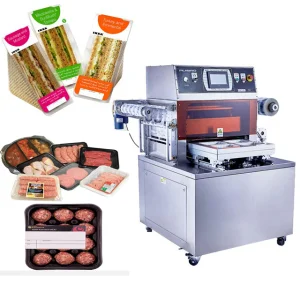
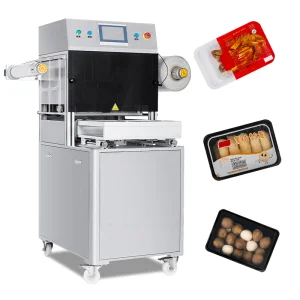
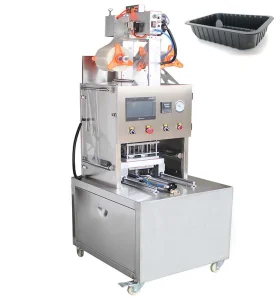
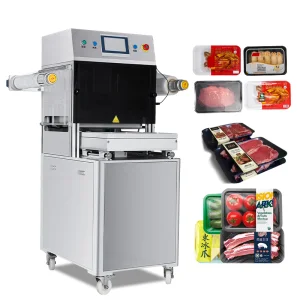
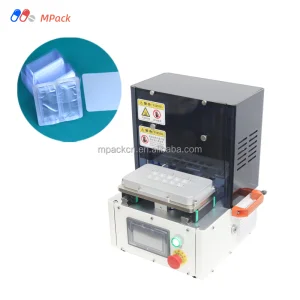
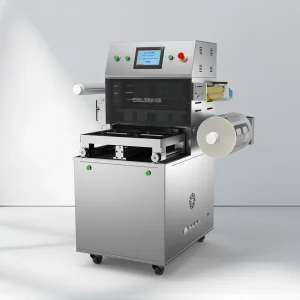
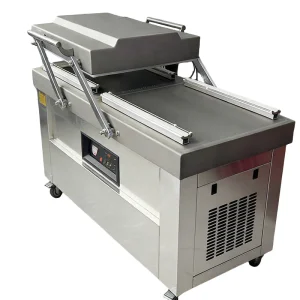
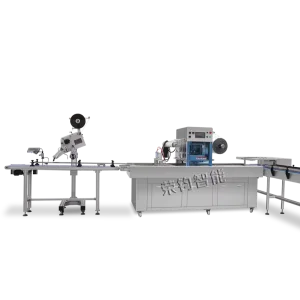
Select from our comprehensive array of packaging solutions designed for varying capacity demands, spatial requirements, and specific food classifications.
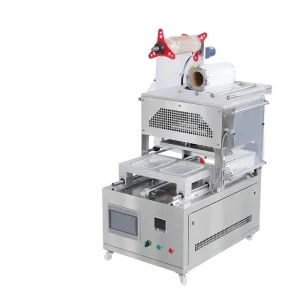
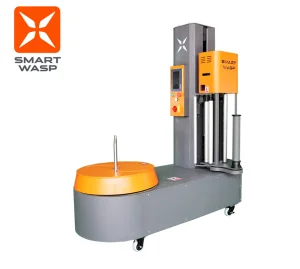
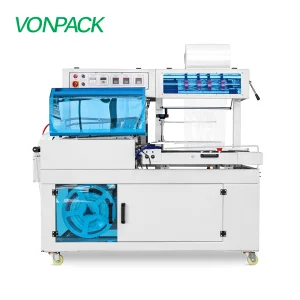
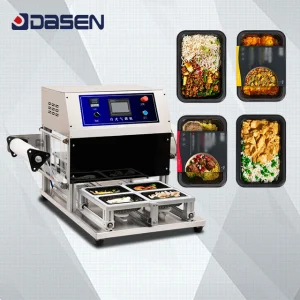
Ningbo Nexa Machine Co., Ltd. is a leading China food packaging machine manufacturer specializing in the design, development, production, and supply of automatic packaging systems and integrated packaging solutions for the global food industry. With years of industry expertise and a commitment to technological innovation, Nexa Machine delivers reliable, efficient, and intelligent packaging equipment to customers worldwide.
Our extensive product portfolio includes vertical form fill seal machines, vacuum packaging machines, pouch packaging systems, tray sealing machines, thermoforming packaging machines, sachet packaging machines, flow wrapping machines, cartoning machines, weighing and filling systems, and fully automated packaging lines. These solutions are widely used in the packaging of snacks, frozen foods, bakery products, confectionery, dairy products, powders, granules, liquids, pet food, and other food applications.
Driven by innovation, Ningbo Nexa Machine continuously invests in advanced manufacturing technologies and research and development capabilities. Our experienced engineering team develops high-performance packaging equipment featuring intelligent control systems, precise filling accuracy, stable operation, energy efficiency, and user-friendly interfaces to meet diverse production requirements.
Quality is the foundation of our success. Every machine is manufactured under strict quality control procedures and undergoes comprehensive testing before delivery to ensure outstanding reliability, safety, and long-term performance. In addition, we offer flexible OEM and ODM services, providing customized packaging solutions tailored to customers' specific production needs.
Serving clients across Europe, North America, South America, Southeast Asia, the Middle East, and Africa, Ningbo Nexa Machine Co., Ltd. has established long-term partnerships with food manufacturers, distributors, and industrial integrators worldwide.
Answers to common engineering and regulatory questions regarding importing and operating MAP machinery in Japanese production facilities.
 Nexa Machine