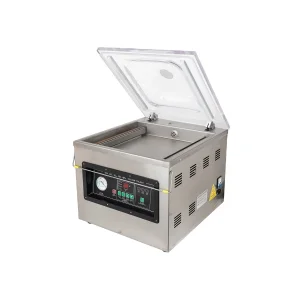
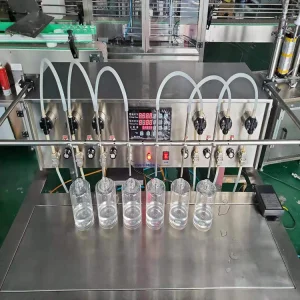
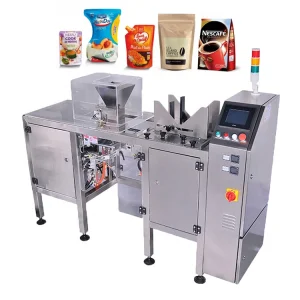
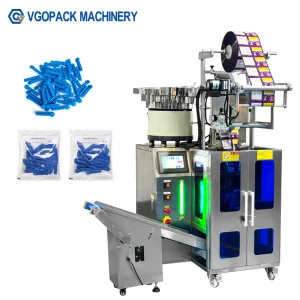
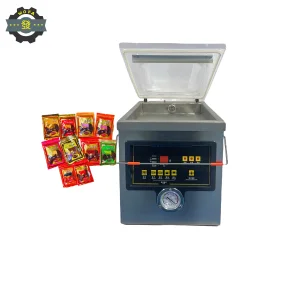
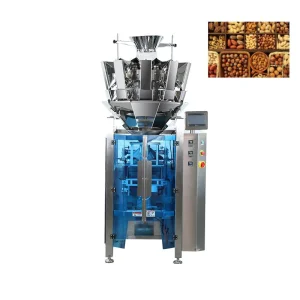
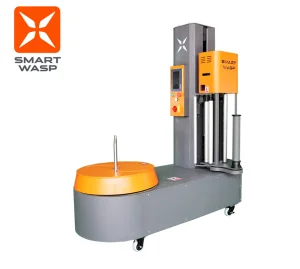
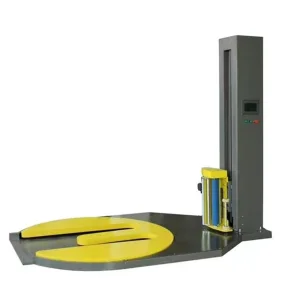
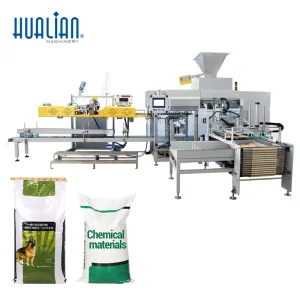
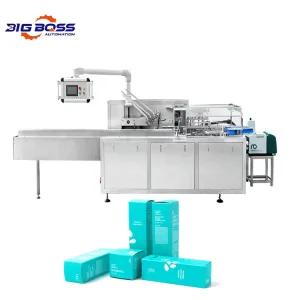
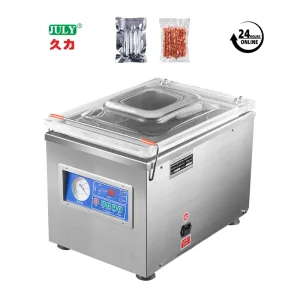
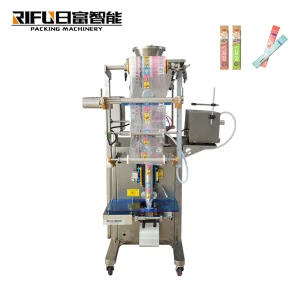
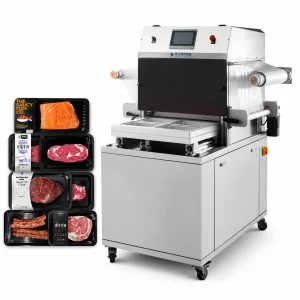
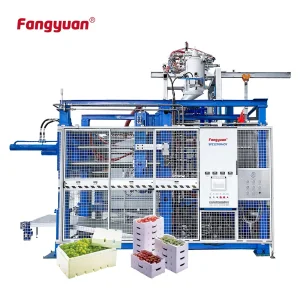
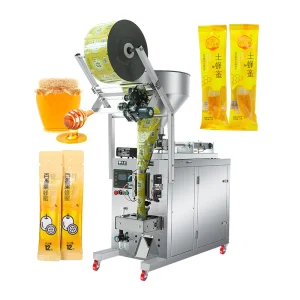
Explore our state-of-the-art machinery engineered for precision filling, vacuum sealing, bagging, and thermal wrapping.
An authoritative analysis of thermal thermodynamics, airflow dynamics, and film materials for high-volume manufacturing lines.
In modern industrial secondary and tertiary packaging, heat shrink tunnels represent the cornerstone of product containment, protection, and aesthetic preservation. Whether utilizing Polyolefin (POF), Polyethylene (PE), or Polyvinyl Chloride (PVC) films, the process demands precise thermal application to activate the film's biaxially oriented molecular memory. Achieving a uniform, defect-free shrink wrap requires a delicate balance of temperature control, uniform airflow distribution, and conveyor speed dynamics.
Without optimal boundary layer thermal control within the tunnel chamber, manufacturers face continuous packaging defects such as dog-ears, fish-eyes, burn-holes, and uneven seals. As global demand shifts toward thinner, eco-friendly bio-based films, the tolerance for temperature fluctuations has dropped to near zero. A variance of even 2°C can spell the difference between a pristine, retail-ready pack and a structural package failure.
The primary mechanism of a heat shrink tunnel is convective heat transfer. The velocity and pattern of the hot air streams play a far more significant role than air temperature alone. High-velocity, turbulent air can strip the thermal boundary layer off the plastic film, leading to rapid shrinkage before the film can drape naturally around the product contours. Conversely, laminar, uniform hot air distribution ensures that the heat energy is absorbed evenly across the entire surface area of the film.
To control this process, high-end Chinese manufacturer designs feature independent upper and lower heating zones, adjustable air nozzles, and variable-speed blowers. Utilizing Proportional-Integral-Derivative (PID) controllers coupled with Solid State Relays (SSR), modern shrink systems maintain temperature stability within tight margins, preventing heat spikes and reducing energy consumption by up to 35% compared to legacy systems.
A deep comparative analysis of tunnel configurations and their appropriate industrial applications.
The workhorse of standard industrial packaging. Utilizing high-efficiency resistance heating elements and dynamic recirculation fans, these tunnels maximize thermal retention by recycling up to 85% of heated chamber air. They are best suited for POF and PVC films on food cartons, cosmetic cases, and printed media.
Engineered for high-speed, continuous container sleeving (PETG/OPS/PVC). Steam provides an exceptionally high rate of thermal transfer and operates at lower temperatures, making it ideal for thin-walled bottles, aerosol cans, and pressurized containers containing temperature-sensitive liquids. Eliminates wrinkling entirely.
Utilizing short-wave or medium-wave infrared emitters, radiant tunnels bypass the surrounding air to heat the film directly. Extremely rapid startup times (under 2 minutes) make this technology perfect for spot-shrinking band sealers, tamper-evident neck bands, and high-density PE film bundling of heavy items.
How regional electrical codes, floor environments, and manufacturing regulations dictate shrink tunnel configurations.
Deployment in North American markets requires compliance with NFPA 79 electrical safety standards, UL 508A certified control panels, and multi-tap transformer designs supporting 480V 3-Phase 60Hz. Conveyor heights must align with a standard 34-inch centerline, and safety interlocks must comply with OSHA directives.
European layouts mandate strict CE conformity with EN ISO 13849-1 PLd safety controls. Furthermore, environments with combustible dust (e.g., flour mills or powder packaging facilities) demand ATEX-certified, spark-proof electrical enclosures, intrinsically safe sensors, and explosion-venting doors.
For wet food processing plants, dairy lines, and seafood packaging facilities, tunnels must feature IP69K rated stainless steel (SUS304 or SUS316) enclosures. This architecture resists high-pressure caustic sanitization procedures, preventing water ingress to critical heating modules.
Why sourcing packaging solutions from premium industrial hubs like Ningbo delivers unrivaled ROI.
The global industrial machinery market relies heavily on the stability, concentration, and vertical integration of manufacturing ecosystems. Ningbo, China, stands as one of the world's most advanced manufacturing clusters for precision packaging systems. The local ecosystem encompasses raw metal fabrication, laser cutting, casting, CNC machining, PLC electronics assembly, and high-capacity port access within a 50-kilometer radius.
At Ningbo Nexa Machine Co., Ltd., we harness this concentrated supply chain to deliver high-performance, custom-configured shrink wrapping tunnels and fully integrated packing lines. Our engineering infrastructure allows us to bypass global shipping bottlenecks and keep components consistently in stock. Key operational advantages include:
A premier global supplier of automated food packaging machinery, tray sealers, and thermoforming lines.
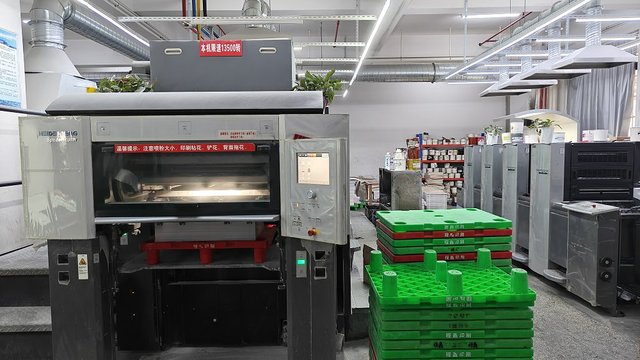
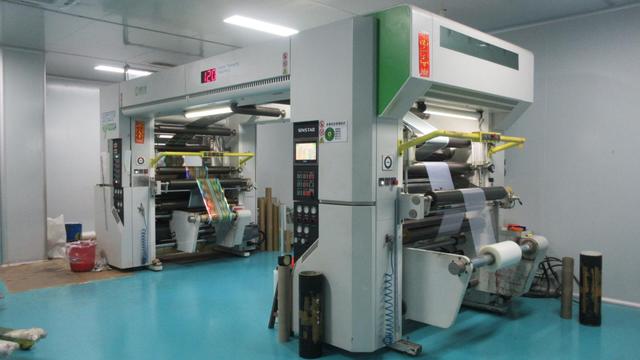
Ningbo Nexa Machine Co., Ltd. is a leading China food packaging machine manufacturer specializing in the design, development, production, and supply of automatic packaging systems and integrated packaging solutions for the global food industry. With years of industry expertise and a commitment to technological innovation, Nexa Machine delivers reliable, efficient, and intelligent packaging equipment to customers worldwide.
Our extensive product portfolio includes vertical form fill seal machines, vacuum packaging machines, pouch packaging systems, tray sealing machines, thermoforming packaging machines, sachet packaging machines, flow wrapping machines, cartoning machines, weighing and filling systems, and fully automated packaging lines. These solutions are widely used in the packaging of snacks, frozen foods, bakery products, confectionery, dairy products, powders, granules, liquids, pet food, and other food applications.
Driven by innovation, Ningbo Nexa Machine continuously invests in advanced manufacturing technologies and research and development capabilities. Our experienced engineering team develops high-performance packaging equipment featuring intelligent control systems, precise filling accuracy, stable operation, energy efficiency, and user-friendly interfaces to meet diverse production requirements.
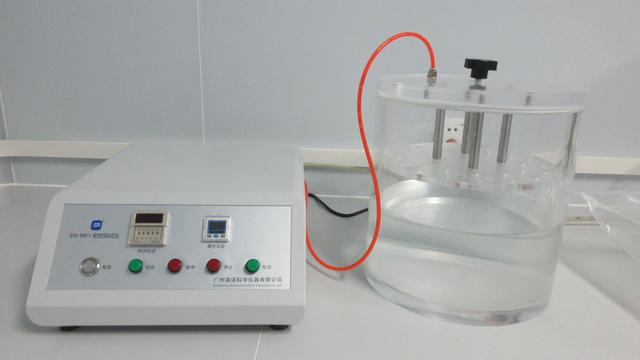
Quality is the foundation of our success. Every machine is manufactured under strict quality control procedures and undergoes comprehensive testing before delivery to ensure outstanding reliability, safety, and long-term performance. In addition, we offer flexible OEM and ODM services, providing customized packaging solutions tailored to customers' specific production needs.
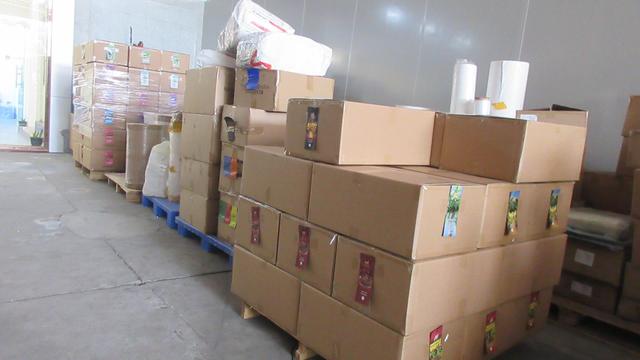
Serving clients across Europe, North America, South America, Southeast Asia, the Middle East, and Africa, Ningbo Nexa Machine Co., Ltd. has established long-term partnerships with food manufacturers, distributors, and industrial integrators worldwide.
How IoT, predictive maintenance, and sustainable films are transforming the next generation of industrial tunnels.
The shrink packaging landscape is changing rapidly under the influence of global sustainability mandates and the transition to Industry 4.0 factory automation. Premium heat shrink tunnels are no longer standalone mechanical units; they are turning into highly integrated, data-rich automation hubs. Our R&D team at Ningbo Nexa Machine Co., Ltd. is focusing on three core developmental areas:
Traditional multi-layered Polyolefin (POF) and Polyethylene (PE) films are increasingly being replaced by biodegradable, compostable, or highly recycled thin-gauge films. These eco-friendly materials have a very narrow thermal shrink window. If the tunnel temperature is 3°C too low, the film fails to react; if it is 2°C too high, the structural integrity of the polymer degrades. Future tunnels incorporate multi-point real-time infrared surface sensors inside the chamber to measure actual film surface temperature rather than static air temperature, dynamically adjusting fan speed and element output instantly.
By integrating Edge-computing modules and industrial Ethernet interfaces (EtherCAT / PROFINET), operators can monitor conveyor motor current, heater element resistance, and fan bearing vibration profiles from central SCADA systems. Anomalies in electrical resistance are detected before a heater coil burns out, triggering an automatic maintenance request to schedule replacement and prevent unplanned downtime.
Current high-end shrink tunnels require manual adjustment of side dampers and nozzle positions when changing product dimensions. Next-generation systems feature motorized, program-driven air deflectors. When a product barcode is scanned at the infeed conveyor, the PLC dynamically recalibrates the conveyor speed, heating zone values, and nozzle positions to accommodate the packaging shape in real time, enabling small-batch, mixed-sku production lines.
Expert technical answers addressing common procurement, engineering, and configuration challenges.
Complete your automation workflow with our premium end-of-line packaging systems, vacuum sealers, and filling lines.
 Nexa Machine